Skip to content
ANG | SAP Platinum Logo
Less Routine, More Time for What Matters

How Companies Eliminate Routine Tasks

Processing emails, transferring data, reviewing documents, or gathering information from various systems: In many companies, these tasks are part of everyday work. Each individual task may only take a few minutes. Taken together, however, routine tasks consume valuable time and resources.

This is exactly where automation and artificial intelligence come into play. When used correctly, they can take over recurring tasks, process information intelligently, and support employees in their day-to-day work. But which tasks are suitable for this, and how do you get started?

Why Routine Tasks Can Become Time-Consuming

Routine tasks aren’t inherently bad. Many of them are necessary for business processes to function reliably. The problem arises when employees spend a large portion of their work time on tasks that follow the same pattern over and over again.

Typical examples include:

Especially when the workload is high, such tasks can not only be very time-consuming but also increase the likelihood of errors.
Woman watching *ANG AI Break* on her laptop
ANG | Female Cafe Worker Tablet

Automate or use AI?

Not every routine task requires AI. For clearly defined processes that always follow the same sequence, traditional automation is often sufficient.
Automation is particularly well-suited for structured workflows that follow fixed rules. For example, it ensures that information is automatically forwarded, data is transferred, or specific process steps are triggered.
Artificial intelligence , on the other hand, comes into play when information first needs to be understood, analyzed, or evaluated. It can recognize content from documents, analyze large amounts of data, or categorize incoming inquiries.
Things get interesting when both technologies work together: AI understands and evaluates information, while automation handles the subsequent processing.

From Routine to Greater Efficiency

Where can routine tasks be reduced?

Opportunities can be found in nearly every area of a company. Processes involving many manual or repetitive steps are particularly interesting.
From invoice entry to the analysis of financial data, numerous tasks can be supported digitally.
In purchasing, too, there are numerous recurring tasks related to requirements, orders, and delivery information.
In sales, automating administrative tasks can free up more time to focus on customers and prospects.
Production data is analyzed more quickly, deviations are identified early on, and those responsible are supported in planning capacity and resources.
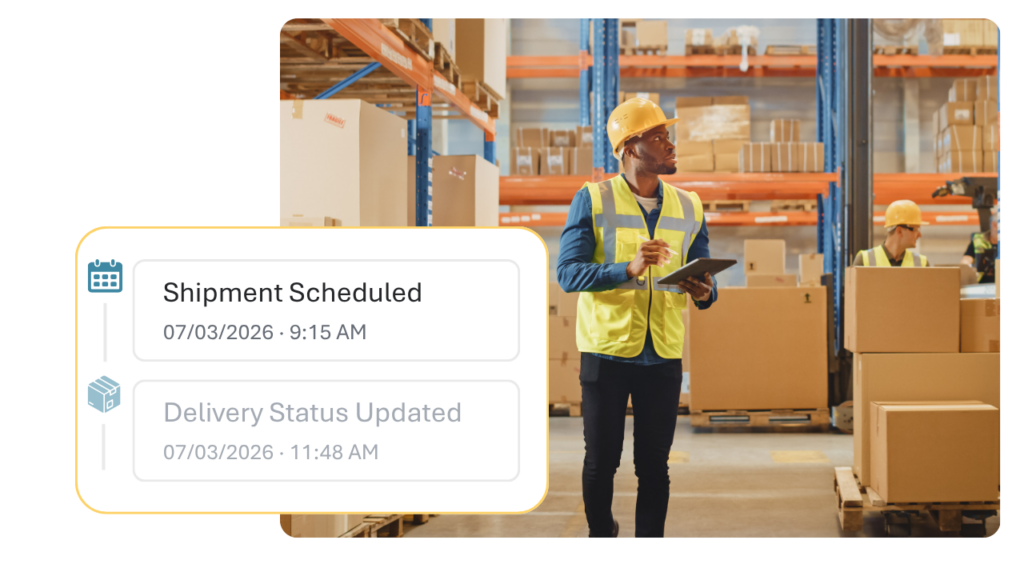
Manual tasks can also be reduced in the areas of goods movement and logistics processes.
AI can recognize information from various types of documents and make it usable for subsequent process steps.

Which tasks are suitable for automation?

Companies don’t have to analyze all their processes right away. Often, simply taking a look at their own day-to-day work is enough to identify initial opportunities for improvement.
The more often these questions are answered with “yes, ” the more worthwhile it is to take a closer look at the respective process to identify opportunities for automation or AI.
ANG | A businesswoman using a digital device to sign electronic documents online. The concept of a paperless workplace: e-signing, electronic signatures, technology, and document management. The future of business contract signing
Field Service Management with SAP Business One

Don't automate everything at once

The goal should not be to automate as many processes as possible at once. Rather, the key is to identify the right processes.
A good place to start is with clearly defined routine tasks where tangible benefits can be achieved. This allows companies to gain initial experience, evaluate the results, and then gradually expand automation to other processes.
Employees should also be involved early on in this process. After all, those who work with the processes on a daily basis often know best which steps are particularly time-consuming and where there is room for improvement.
Conclusion

Recognize Routines, Harness Potential

Completely eliminating routine tasks from day-to-day business operations is neither realistic nor necessary. Rather, the key is to identify which tasks are still being performed manually today, even though they could be effectively automated.
With the right combination of automation and artificial intelligence, companies can gradually create more efficient processes. The best starting point for this is often closer than you might think: the small, repetitive tasks that take up time day after day.
Crystal Report Integration

Where does your company have the greatest potential for AI?

Every company has processes with potential for automation. The challenge isn’t simply implementing any AI, but identifying the right use cases.

Let’s work together to find out where AI can save time, streamline processes, and lighten the workload for employees in your company.

From Concept to Implementation

Would you like to know where AI can bring you the greatest benefits?

Visit our AI & Processes section and discover specific use cases, real-world examples, and opportunities for your business. After all, the most exciting AI projects don’t start with a tool—they start with a process.
The World of AI Processes
Discover AI Across Your Processes
Learn how artificial intelligence can be used in areas such as finance, procurement, sales, logistics, and manufacturing.
SAP Business One
Use AI directly in ERP
Use AI strategically within SAP Business One to analyze data more effectively, automate processes, and make informed decisions faster.
AI Explained in Simple Terms
ANG AI Breaks
Concise, practical, and immediately actionable: Our AI Breaks showcase the latest technologies, trends, and applications for small and medium-sized businesses.
From Concept to Implementation
Your Partner for Getting Started with AI
Not every AI solution is right for every company. We help you evaluate opportunities, set priorities, and turn ideas into concrete projects.