




Skip to content
SAP Platinum logo
SAP Platinum logo
Informed Decisions Based on Intelligent Analytics

AI for Better Forecasts and Planning

Whether it’s sales planning, resource management, or revenue forecasting, companies make decisions every day that depend heavily on the quality of their planning. But especially in dynamic markets, traditional forecasting methods are increasingly reaching their limits. Changes in customer behavior, fluctuating demand, and unexpected market developments make reliable forecasts more difficult than ever.
This is precisely where artificial intelligence can make a decisive contribution. By analyzing large volumes of data and identifying complex patterns, it helps companies create more informed forecasts and optimize planning processes.

Why Traditional Forecasts Often Reach Their Limits

In many companies, forecasts are still based on historical data, experience, or manual estimates. While these methods provide valuable insights, they often fail to take all relevant factors into account.

Typical challenges include:

The result: Forecasts become less accurate, and decisions are made with greater risk.
AI for Better Forecasts and Planning
ANG Image Asset No 122 | ANG

How AI Improves Forecasts

AI can analyze significantly larger volumes of data than traditional methods and identify correlations that are often difficult for humans to detect. In doing so, it takes into account not only historical company data but also other influencing factors such as seasonal trends, customer behavior, and external market indicators.
AI can help with this:

Requirements for Successful AI-Powered Forecasts

For AI to reach its full potential, companies should lay some groundwork:
It’s important to note that you don’t have to start with a large-scale project. Often, even individual areas of application can deliver quick benefits.
ANG Image Asset 104 | ANG
ANG Image Asset No 121 | ANG

AI doesn't replace experience—it complements it

Despite all its capabilities, AI remains a tool to support decision-making. The technology provides valuable insights and data-driven recommendations, but it does not replace the expertise and experience of employees.
The best results are achieved when human expertise and intelligent analytics work together. While AI analyzes data and forecasts trends, subject matter experts can interpret the results and place them in the proper context.

AI for Better Forecasts and Planning

Better Forecasts Along the Entire Value Chain

Well-founded forecasts are the foundation for successful decisions. Whether in financial planning, procurement, sales, or production, AI helps companies identify trends early on, better assess risks, and base their planning on a broader data foundation. The use of AI offers particularly great potential in areas where large volumes of data need to be analyzed and future developments reliably predicted.
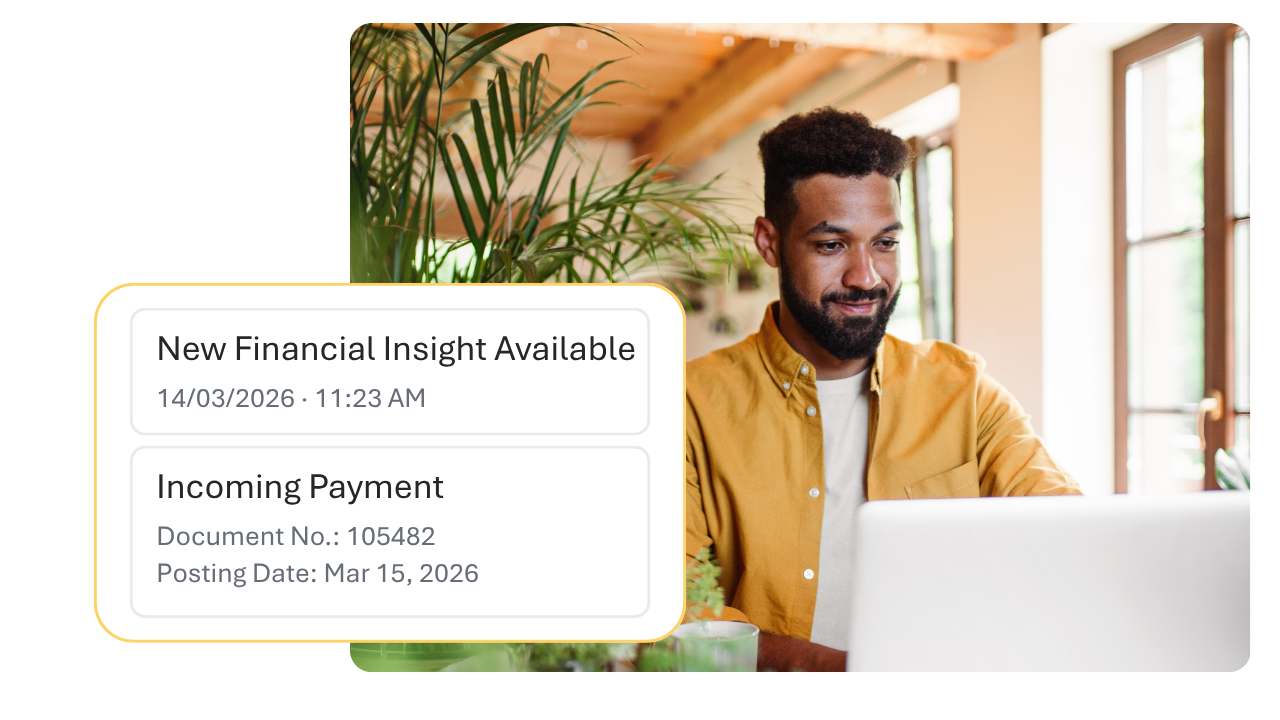
AI helps analyze financial data and identifies trends or anomalies early on. This enables more accurate planning of cash flows, liquidity, and budgets.
Fluctuating demand and delivery times make reliable planning difficult. AI helps identify trends early on and manage supply chains more efficiently.
AI makes it easier to assess sales trends and customer behavior. This results in more reliable sales forecasts and greater planning certainty.
More precise planning of resources, capacity, and production volumes lays the foundation for efficient processes and better capacity utilization.
By analyzing inventory and movement data, AI helps plan inventory levels based on demand and optimize logistics processes.
Documents and business processes also contain valuable information for planning. AI can extract this data and make it usable for forecasts.
Conclusion

Greater certainty in planning and decision-making

AI opens up new opportunities for companies to make forecasts more accurate and improve planning processes. By intelligently analyzing large volumes of data, companies can identify trends early on, reduce risks, and make more informed decisions.
Companies that combine data-driven forecasts with their employees’ expertise lay the foundation for greater transparency, better planning, and more successful business decisions in the long term.
Automating Financial Processes with AI and SAP Business One

Where does your company have the greatest potential for AI?

Every company has processes with potential for automation. The challenge isn’t simply implementing any AI, but identifying the right use cases.

Let’s work together to find out where AI can save time, streamline processes, and lighten the workload for employees in your company.

From Concept to Implementation

Would you like to know where AI can bring you the greatest benefits?

Visit our AI & Processes section and discover specific use cases, real-world examples, and opportunities for your business. After all, the most exciting AI projects don’t start with a tool—they start with a process.
The World of AI Processes
Discover AI Across Your Processes
Learn how artificial intelligence can be used in areas such as finance, procurement, sales, logistics, and manufacturing.
SAP Business One
Use AI directly in ERP
Use AI strategically within SAP Business One to analyze data more effectively, automate processes, and make informed decisions faster.
AI Explained in Simple Terms
ANG AI Breaks
Concise, practical, and immediately actionable: Our AI Breaks showcase the latest technologies, trends, and applications for small and medium-sized businesses.
From Concept to Implementation
Your Partner for Getting Started with AI
Not every AI solution is right for every company. We help you evaluate opportunities, set priorities, and turn ideas into concrete projects.