


The five biggest stumbling blocks with e-billing - and how to avoid them
What companies should pay attention to now in order to set up processes, formats and requirements correctly at an early stage
The requirements relating to e-invoicing are increasing noticeably throughout Europe – and with them the pressure on companies to act. Nevertheless, there is still uncertainty in many companies: Which formats are relevant? Is a PDF not enough? And what does the changeover actually mean for existing processes?
Together with our SAP Consultant Aaron Terzer, we talked about the most common challenges that companies face when introducing e-billing. In the interview, he explains why technical standards alone are not enough, which stumbling blocks are particularly common in practice and what companies should pay attention to now in order to avoid problems later.
From different country requirements and missing tests to the question of how everyday working life will really change: This article provides a compact overview of the five biggest stumbling blocks to e-billing – and shows how you can avoid them at an early stage.
"PDF is enough" - a common misconception
Although a PDF is digital, it is generally not structured. An e-invoice, on the other hand, is machine-readable and follows a clear data logic. The advantage is obvious: invoice data can be automatically processed, checked and transferred to the ERP – instead of being manually typed or laboriously interpreted.
Note: PDF = “readable for people” and e-bill = “readable for systems”.
Is e-bill the same as e-invoice?
There is no real standardization in Europe (yet). Each country can specify its own formats – and often also its own rules on how an e-invoice must be transmitted. While some countries allow e-invoices to be sent by email or direct data exchange, others rely on mandatory networks such as PEPPOL or even government portals/systems.
Takeaway: If you invoice internationally, you need to cover the format and transmission channel for each country.
Tested too little - productive too early
Even if a format is “defined”: In practice, there is room for interpretation and optional fields. An example: If a standard expects a “buyer’s identifier” – does this mean the customer number in the supplier system, the UID, the company name or something completely different? Different partners often expect different content, even though the field has the same name.
In addition, master data and processes must fit: Is the partner data complete? Does the interface to PEPPOL or a government system work reliably? Can e-invoices be received, validated, imported and archived correctly?
Recommendation: Test end-to-end – from creation to sending/receiving to posting and archiving.
E-bill in everyday life - what is really changing?
Ideally, everything remains as usual when sending: the e-invoice is generated in the background and sent automatically (or with a click). There is more change when it comes to receiving: this is where the potential lies to automatically read invoice data and transfer it to the ERP. A technical check before posting remains important – but the “write-off” can be omitted.
The crux of the matter: How do you ensure that suppliers deliver the required data in the right structure?
The most important advice: inform early - and start in good time
Because requirements differ significantly from country to country (format and transmission), it is worth clarifying early on: Which countries, which customers, which authorities? What is mandatory, what is “nice to have”? If you check the legal requirements at an early stage, you save yourself hectic ad-hoc projects later on – and reduce the risk of rejections, delays and manual workarounds.

Why ANG Digital Invoice?
ANG Digital Invoice is fully integrated into SAP Business One: E-invoices can be generated and imported directly from the ERP – without end users having to fundamentally change their workflow after configuration. When invoices are received, the solution supports the transfer of structured data and the clear assignment of documents.
Particularly important in an international context: the solution is flexibly expandable and can map different formats and customer-specific requirements – centrally, consistently and adaptably.
A tip that always applies?
E-invoices are on the rise in Europe. If an obligation has been announced in your country: start planning and implementation as early as possible.
And if it is not yet mandatory, it is still worth taking a proactive step: talk to your largest suppliers and ask whether they already offer e-invoices. This will save you time in the medium term – and you will have laid the foundations before the requirements take effect.

Safe until 2027, efficient from today.
Expand your knowledge of electronic invoicing
Optimize processes, automate workflows and get more out of your system.
Solution Guide
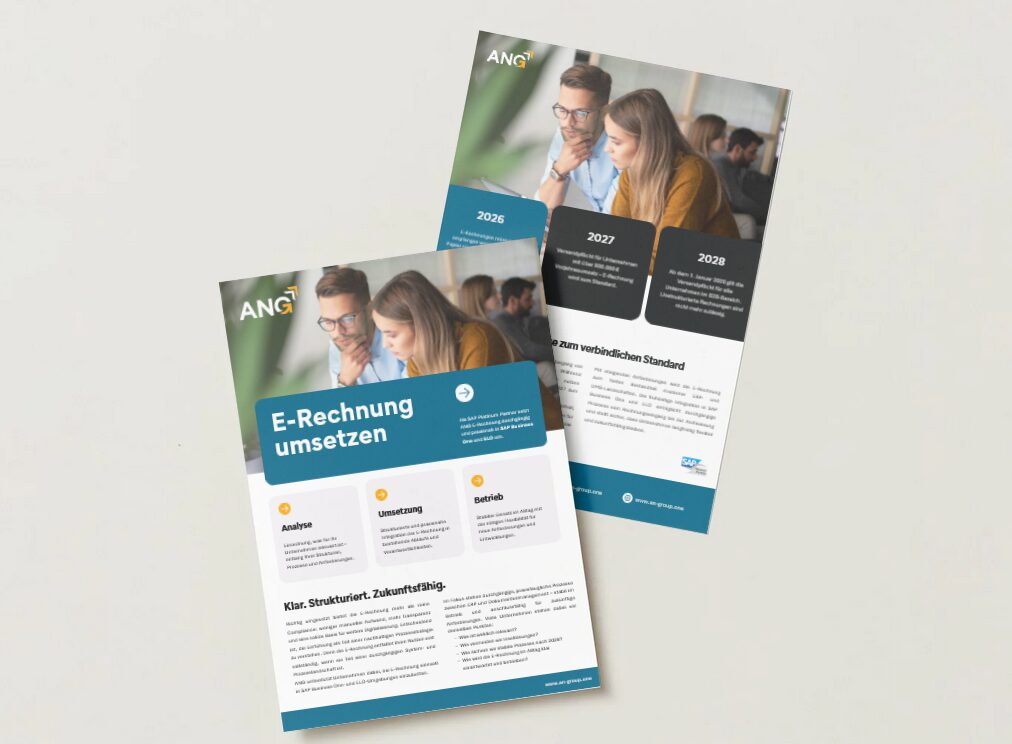
Implementing e-billing - from an obligation to a stable process

Webinar | 27.05 | 10:00 a.m.
Switching to electronic invoicing - why and how?
Factsheet
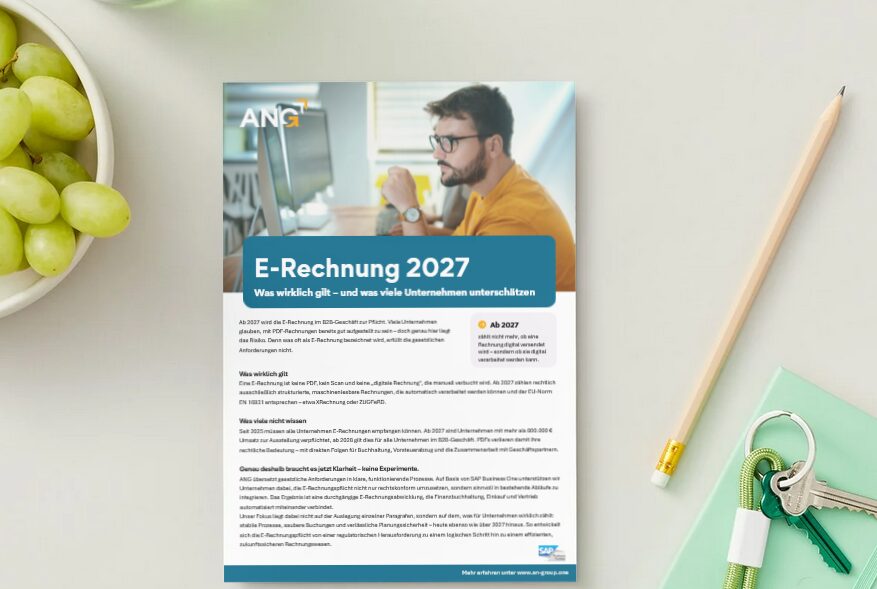
What really applies - and what many companies underestimate