

Skip to content
SAP Platinum logo
SAP Platinum logo

Your ERP can do more. We make it smart.

Automating Financial Processes with AI

From invoice processing to cash flow planning—
find out where AI can truly speed up your financial processes.
ANG KI Header Video Finanzprozesse1 | ANG

Others talk about AI. We integrate it into your processes.

Greater Efficiency in Your Financial Processes

Today, financial processes are often manual, fragmented, and difficult to manage. With AI and SAP Business One, you can automate your processes—from invoice processing to cash flow planning.
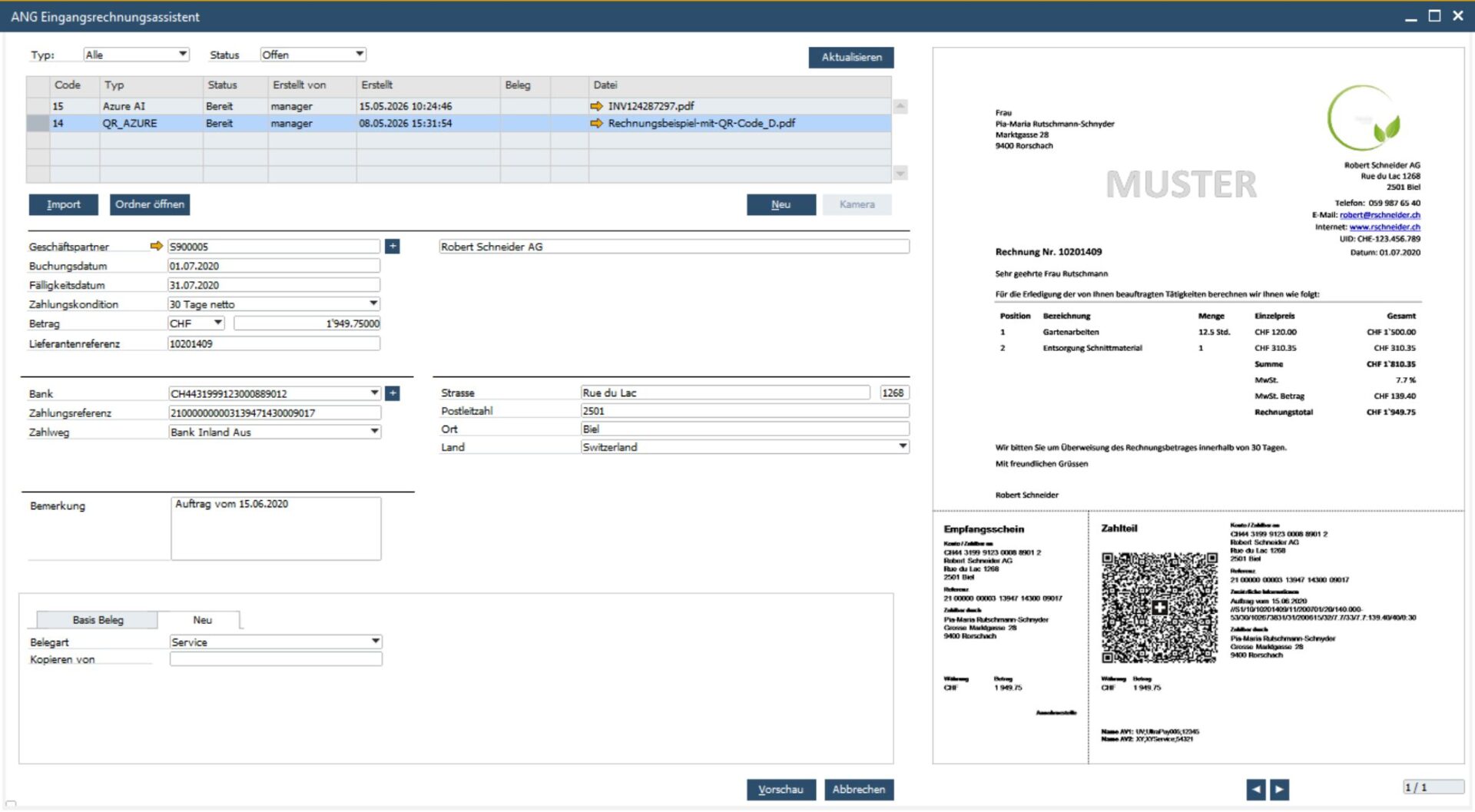
In many companies, invoices, approvals, and financial information are still processed manually or managed across various systems. This takes time, makes analysis more difficult, and delays decision-making.

With AI and SAP Business One, you can lay the foundation for end-to-end financial processes. Incoming invoices are processed in a structured manner, journal entries are prepared, and relevant financial data is automatically made available. Information is available more quickly and can be used immediately for analysis, planning, and decision-making.

This creates a finance department that not only documents but also actively manages. Less routine work, greater transparency, and a reliable database enable better control over liquidity, costs, and business performance.

Making Transparent Financial Decisions

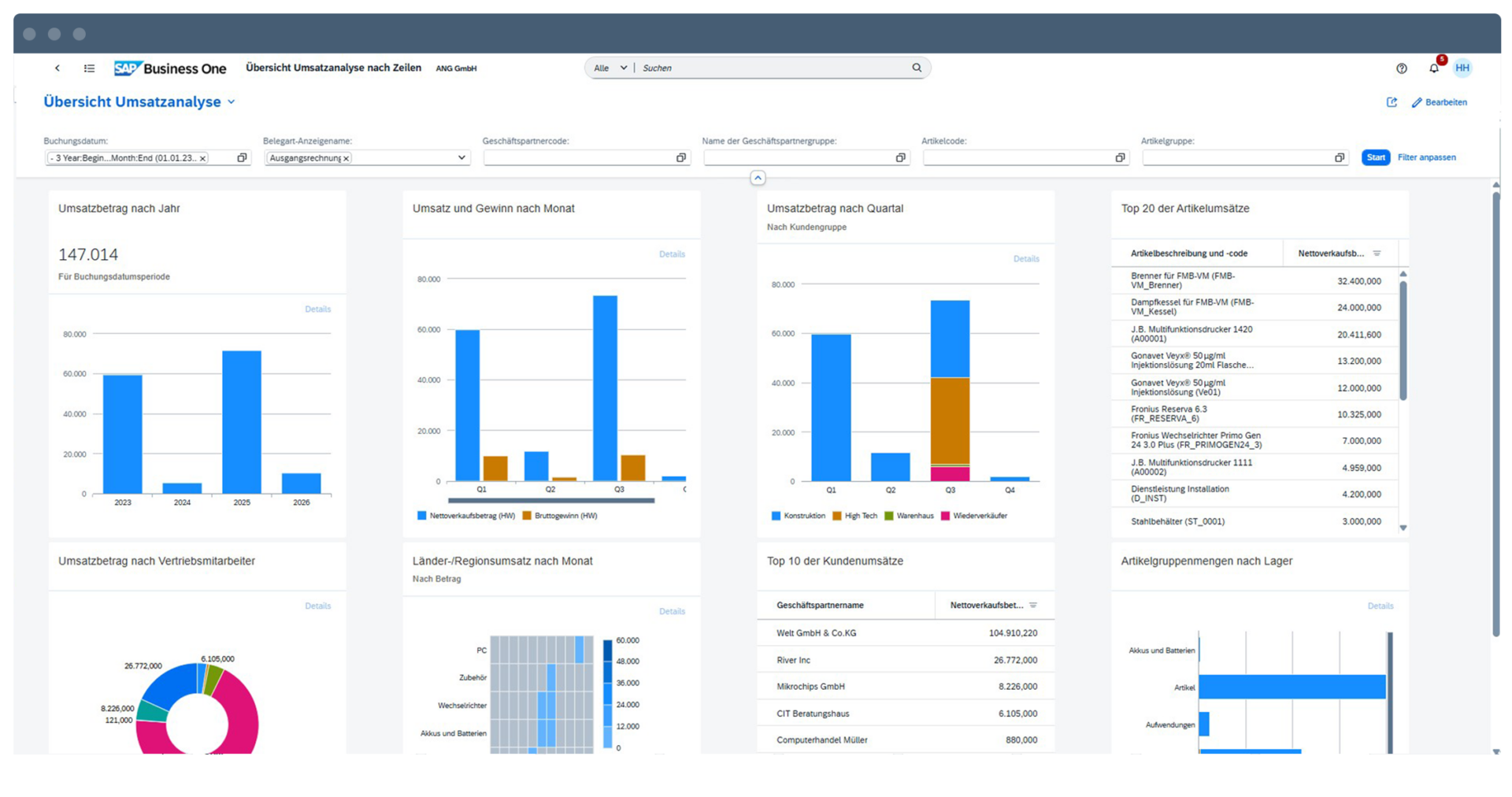
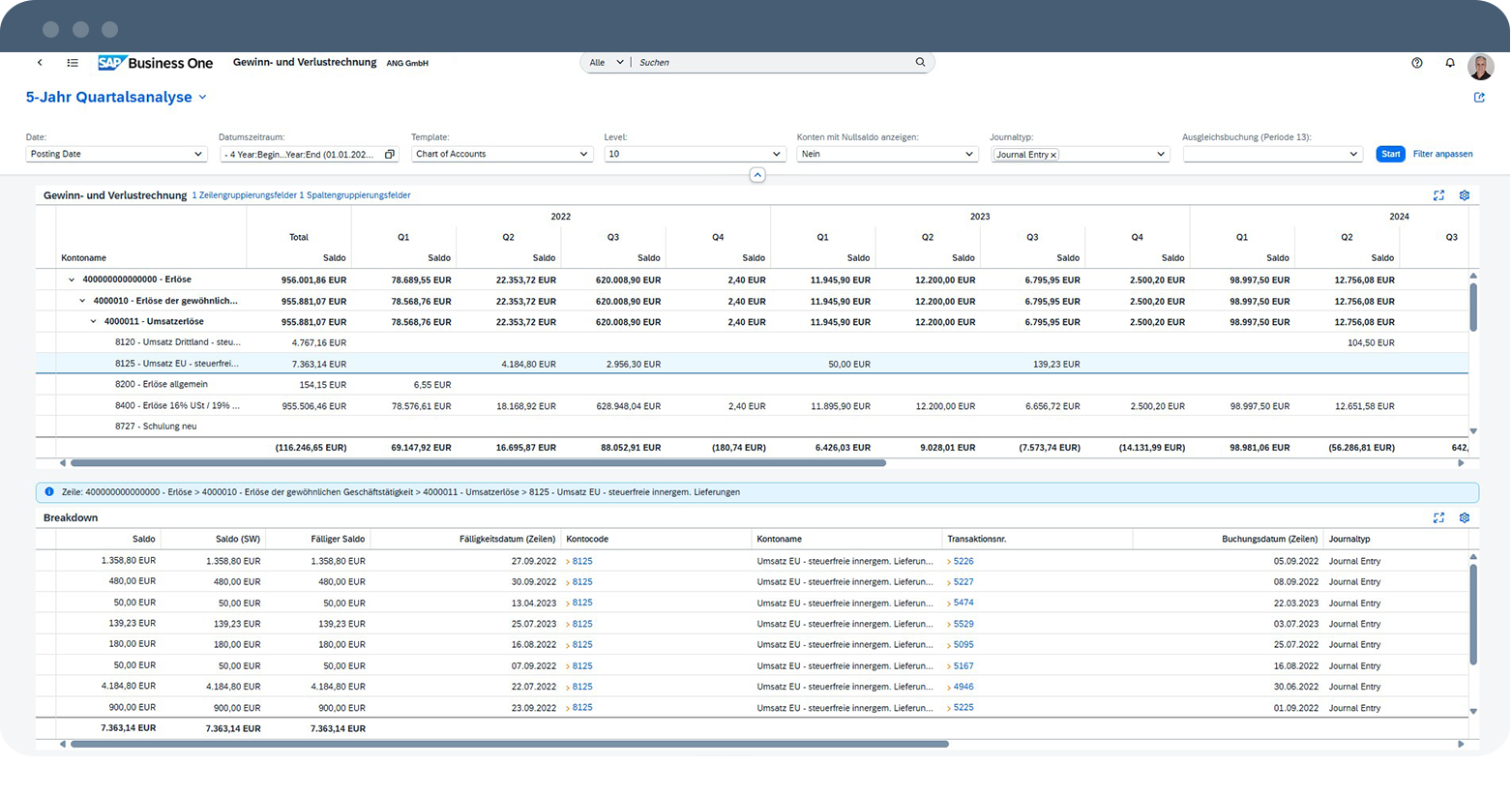
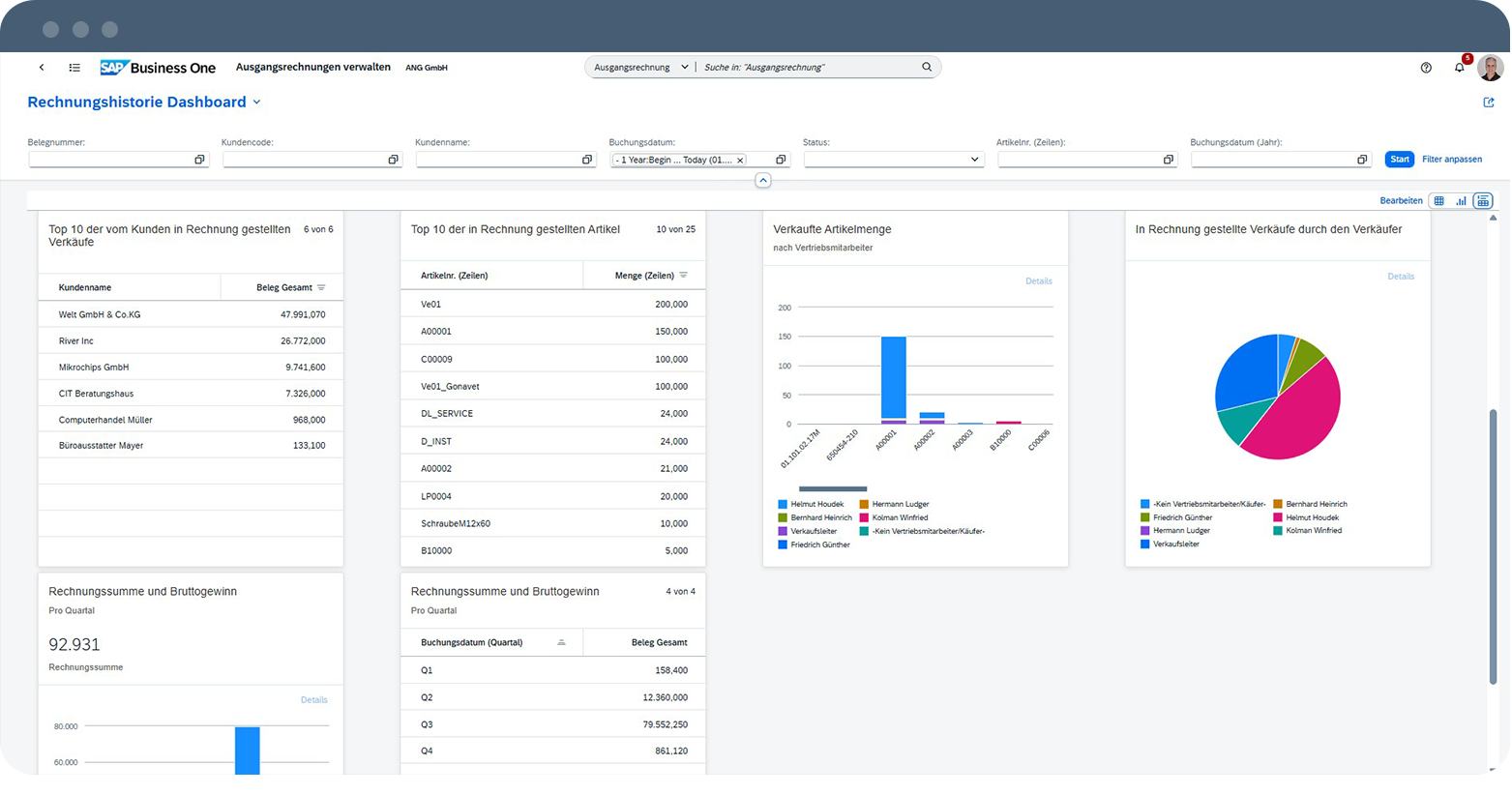
Access consistent financial data directly in SAP Business One at any time. Automated processes and AI-powered analytics ensure that journal entries, documents, and key metrics are consolidated in real time. You'll eliminate delays in reporting and gain a reliable, up-to-date view of your financial performance.

Actively Manage Liquidity and Secure Cash Flow

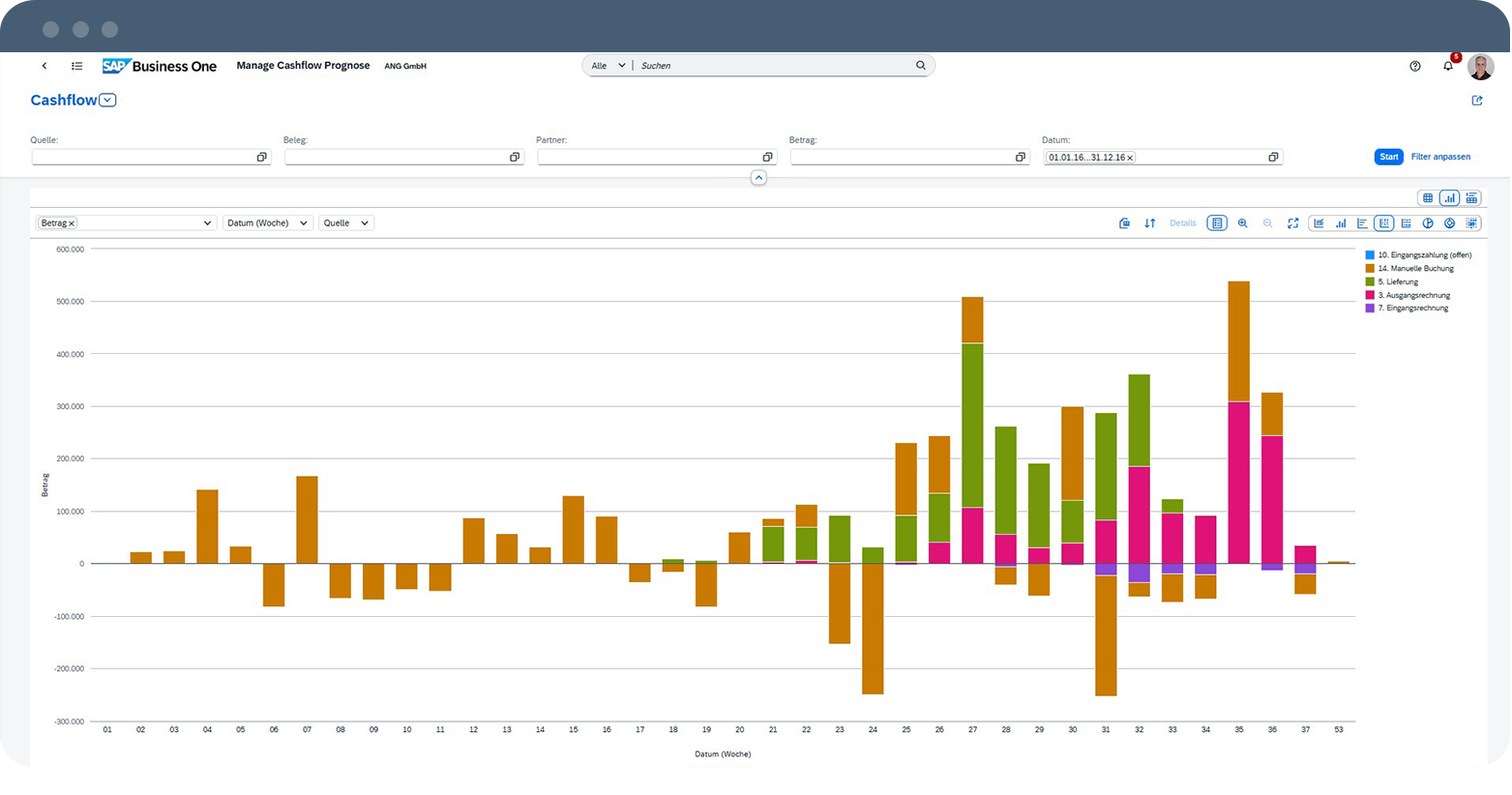
Use AI-powered analytics to manage your liquidity strategically and assess it early on. Open items, cash flows, and liabilities are automatically analyzed and incorporated into cash flow forecasts. They prioritize actions based on data and manage liquidity proactively rather than reactively.

Ensuring Compliance and Managing Risks

Manage your financial processes using clearly defined workflows directly within the system. AI helps identify discrepancies early on and automatically highlights anomalies. Approvals, postings, and changes are documented in a traceable manner and can be reviewed at any time.

Enabling Structured and Controlled Growth

Standardized processes and intelligent enhancements ensure that new requirements can be accommodated without adding complexity. AI helps you scale your financial processes and provides transparency even as data volumes increase. You can grow without losing control of your finances.

Automatically recognize and understand orders and process them directly in SAP Business One.

Targeted Development of Financial Processes Using AI

Use AI to optimize your financial processes in SAP Business One in a targeted way.
Automate workflows, improve your data quality, and manage liquidity, financial statements, and risks based on up-to-date ERP data.
Automate the processing of incoming invoices
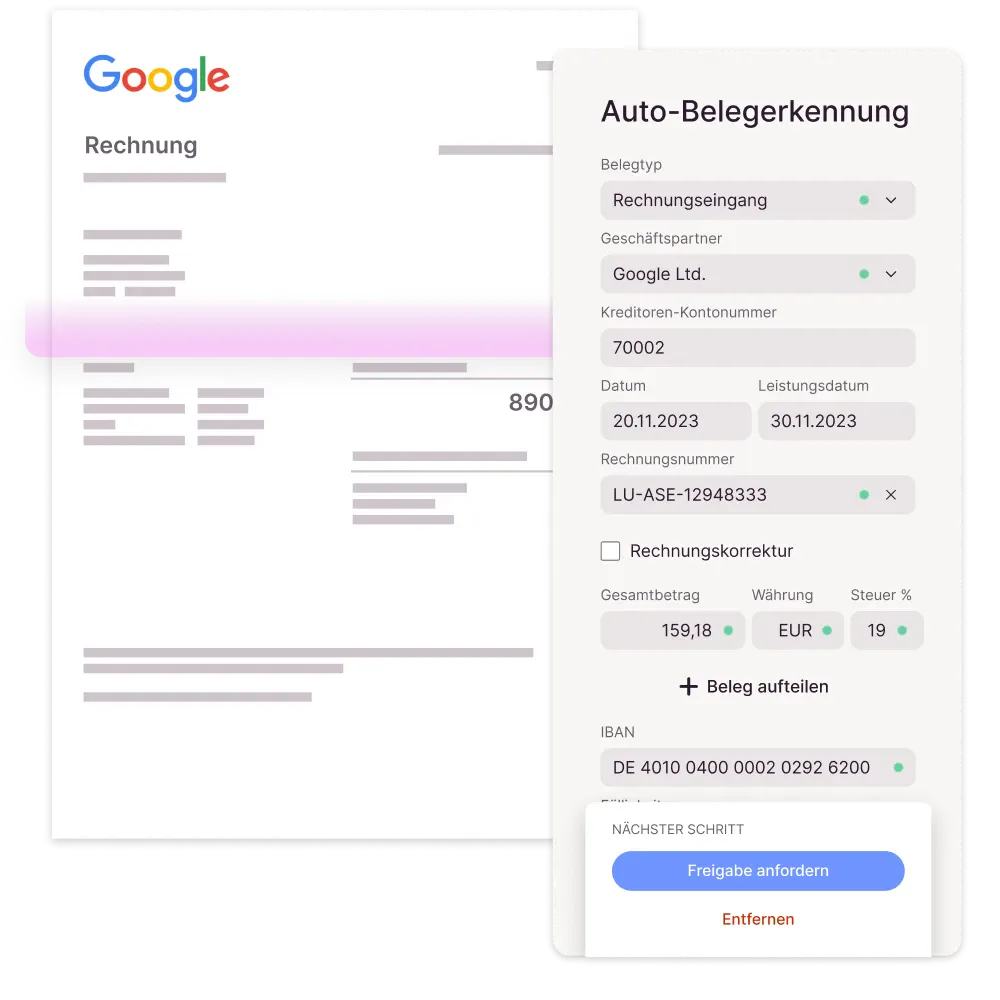
Automate the processing of incoming invoices directly within SAP Business One. AI identifies relevant content, extracts data, and prepares it for further processing with system support.
Automate Posting Processes and Speed Up Financial Closings
Use AI to streamline recurring posting processes and prepare financial statements more efficiently. Postings, supporting documents, and reconciliations are seamlessly integrated within the system.
Analyzing Cash Flow and Managing Liquidity
Turn your existing ERP data into a reliable basis for decision-making regarding your cash flow management. AI helps you analyze cash flows and identify trends early on.
Analyze Financial Data in Real Time
Use AI-powered analytics to identify anomalies in financial data more quickly. Deviations, unusual entries, or patterns are automatically highlighted.
Ensuring Control and Compliance
Enhance control, traceability, and security in your financial processes. AI helps identify critical operations and makes processes systematically verifiable.

Why AI Makes a Difference in Financial Processes

The real value of AI lies not in individual functions, but in the way processes are linked together.
AI steps in exactly where time is lost today:
AI does not use isolated data, but instead accesses your existing ERP data in SAP Business One directly.
Automating Financial Processes with AI and SAP Business One
ANG Image Asset No 124 | ANG

Finance Departments as an Active Management Function

With automated and AI-driven processes, the role of the finance department is also changing. The focus is shifting away from manual tasks and toward analysis, evaluation, and management.

Data is available more quickly, analyses are more consistent, and decisions can be made sooner. For CFOs and senior management, this means:

AI in Financial Processes—Thinking Outside the Box

AI Use Cases for Modern Financial Processes

🔍 Automatic document recognition and assignment
AI recognizes content from invoices, receipts, and documents and assigns it to the correct business partners, projects, or entries.
🧠 Generate smart booking suggestions
Based on historical data and posting patterns, AI generates automatic account assignment suggestions directly in the ERP system.
⚠️ Identifying Anomalies and Incorrect Entries
AI analyzes transactions and detects discrepancies, unusual patterns, or potential errors in real time.
💰 Forecasting Cash Flow and Liquidity
Based on open items, cash flows, and historical data, AI generates reliable forecasts of liquidity trends.
✅ Smartly manage and prioritize approvals
AI evaluates invoices and transactions based on relevance, amount, or risk, and automatically prioritizes approvals.
📈 Automatically Interpret Financial Metrics
AI analyzes key metrics and identifies trends, risks, or anomalies in performance.
⚠️ Identify bad debts early
AI analyzes payment behavior, dunning stages, and customer histories to identify increased default risks early on.
📬 Create automatic account assignment suggestions
Based on historical entries, AI suggests appropriate general ledger accounts, cost centers, or projects.
🏦 Intelligently Reconcile Bank and ERP Data
Integration of SAP Business One and EBICS for the automatic reconciliation of bank statements, payments, and open items.
🎯 Smartly Prioritize Payment Suggestions
AI evaluates due dates, potential cash discounts, liquidity, and priorities, and helps with optimal payment planning.
📊 Simulate forecasts and scenarios
AI calculates various trends in liquidity, revenue, and costs based on current business data.
🤖 Financial Copilot for SAP Business One
Ask questions about liquidity, open items, key metrics, or journal entries in natural language and get answers directly from your ERP data.

// References

See how companies grow with SAP

Ensure efficient financial management with AI-powered ERP for revenue, expense, and cash management, and benefit from industry-specific best practices at predictable, transparent costs.
Eiszeit GmbH 3 | ANG
Eiszeit GmbH: Efficient Processes for High Order Volumes
With SAP Business One, Eiszeit is laying the foundation for transparent processes, faster order processing, and a centralized database to support further growth.
Trafag Building 0943 | ANG
Trafag AG: Greater Transparency Through Real-Time Data
Using SAP Business One, Trafag is digitizing its business processes and creating a central database to enable faster decision-making and greater transparency in day-to-day operations.
Ensinger 01 | ANG
Ensinger Sintimid: Greater Transparency in Document-Intensive Processes
The digital integration of ERP and document processes makes information available more quickly and allows business processes to be managed more efficiently.

What is a financial management system?

A financial management system consolidates all of a company’s finance-related processes into a single central platform—from invoice processing, accounting, and controlling to cash flow planning, reporting, and compliance.

Modern financial management systems go far beyond the mere administration of financial data. Through the use of AI, invoices are processed automatically, journal entry suggestions are generated, anomalies are detected, and cash flow forecasts are produced. Financial data is not only recorded but also actively analyzed and used to make informed decisions.

When combined with SAP Business One, this creates an end-to-end solution for intelligent financial processes. Companies can automate workflows, achieve real-time transparency, and gain a reliable foundation for managing liquidity, risks, and growth.

ANG Image Asset 115 | ANG

From the idea to implementation

Tailored Solutions for Smart Financial Processes

From e-invoicing to digital document workflows to AI-powered invoice processing: Discover solutions that reduce manual effort and provide transparency into your financial data.
ANG Image Asset No 133 | ANG
ANG Digital Invoice
Processing E-Invoices Smartly
Automate the receipt, transmission, and processing of e-invoices. Less effort, faster workflows, and maximum transparency in your financial processes.
ELO Digital Office and SAP Business One
ELO Digital Office
ELO for Smart Financial Processes
With ELO, you can create transparent workflows for invoices, contracts, and documents. AI helps you use information efficiently and automate processes.
Candis Digitales Rechnungsmanagement 1 | ANG
SAP Extension
AI-Powered Invoice Processing
Less effort, faster approvals, and greater transparency: AI handles invoice capture and streamlines your financial processes from start to finish.
ANG Image Asset 113 | ANG
🇨🇭 Focus Switzerland
ANG incoming invoice CH - automated directly in SAP
This enables companies in Switzerland to process incoming invoices efficiently, in a structured manner and close to SAP – including the classification of QR-bills and e-bills.

Rethinking Financial Processes—with AI

Unlock the potential of your existing systems and make your financial processes faster, more transparent, and more manageable.

Together, we’ll identify where automation and AI can have the greatest impact in your SAP Business One—and implement them strategically.