
Skip to content

SAP Business One for Production & Manufacturing

With SAP Business One, you can integrate production planning, material requirements planning, bills of materials, production orders, resources, and inventory into a single, centralized ERP system. This enables you to create end-to-end manufacturing processes and better coordinate production, purchasing, warehousing, and sales.
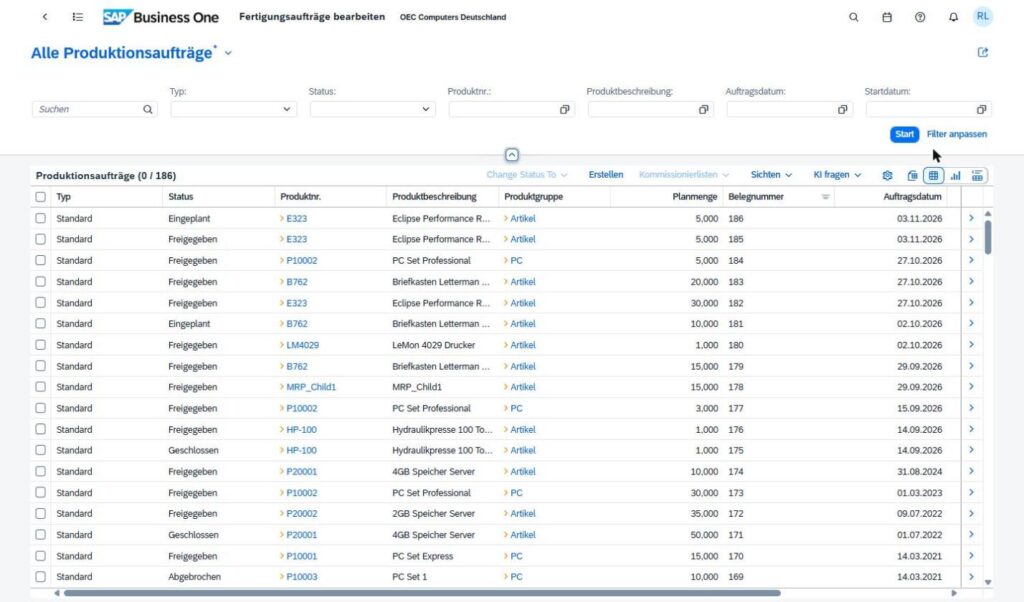
SAP Business One Produktion 01 Produktionsplanung Fertigungsauftraege ANG | ANG
  • Home page
  • /
  • SAP Business One Production & Manufacturing

SAP Business One for Production & Manufacturing

Efficiently Plan and Manage Production

With SAP Business One, you can manage your manufacturing processes end-to-end in a single system. From material requirements planning and bills of materials to production orders and the confirmation of finished goods, you can keep track of materials, inventory, and production processes at all times.

Central Production Data

Consolidate relevant information on materials, bills of materials, orders, and inventory in a central ERP system.

End-to-End Processes

Connect purchasing, warehousing, and production to reduce information gaps between the various departments.

Transparent Material Flows

Keep track of material requirements, available inventory, and incoming and outgoing shipments throughout your manufacturing processes.

Latest Information

Use centralized production and inventory data as the basis for planning, control, and operational decisions.

From the bill of materials to the finished product

Production does not operate in isolation. SAP Business One integrates sales, production planning, purchasing, warehousing, and finance into a single database, thereby creating a seamless process from customer demand to the finished product.
  • Sales Order

  • Production Planning

  • Material Requirements

  • Procurement

  • Manufacturing

  • Inventory & Delivery

  • Finance

Learn About Production and Manufacturing Functions

PRODUCTION PLANNING

Planning Manufacturing Processes in a Structured Manner

With SAP Business One, you can coordinate production requirements, materials, and production orders using a single database. This provides greater transparency into what needs to be produced and what prerequisites must be met.
Production Requirements
Determine production requirements based on your business processes and establish a reliable foundation for further planning.
Manufacturing Orders
Plan and manage production orders centrally, and keep a clear overview of quantities, materials, and statuses.
Material Availability
Check available inventory and factor in the materials you need early on in your production planning.
Integrated Planning
Integrate production processes with the upstream workflows in sales, purchasing, and warehousing.

PARTS LISTS

Clearly Display Product Structures

With bills of materials in SAP Business One, you can map the materials and components of your products in a structured way. This provides a central foundation for material planning, manufacturing, and inventory management.
Product Structures
Clearly map materials, assemblies, and components in multi-level product structures.
Components & Materials
Assign the required materials and components to the respective product or manufacturing process in a structured manner.
Central Master Data
Manage production-related information centrally and make it available for downstream processes.
End-to-End Manufacturing
Use bills of materials as the basis for material requirements, work orders, and other production processes.

MANUFACTURING ORDERS

Manage Production Orders Transparently

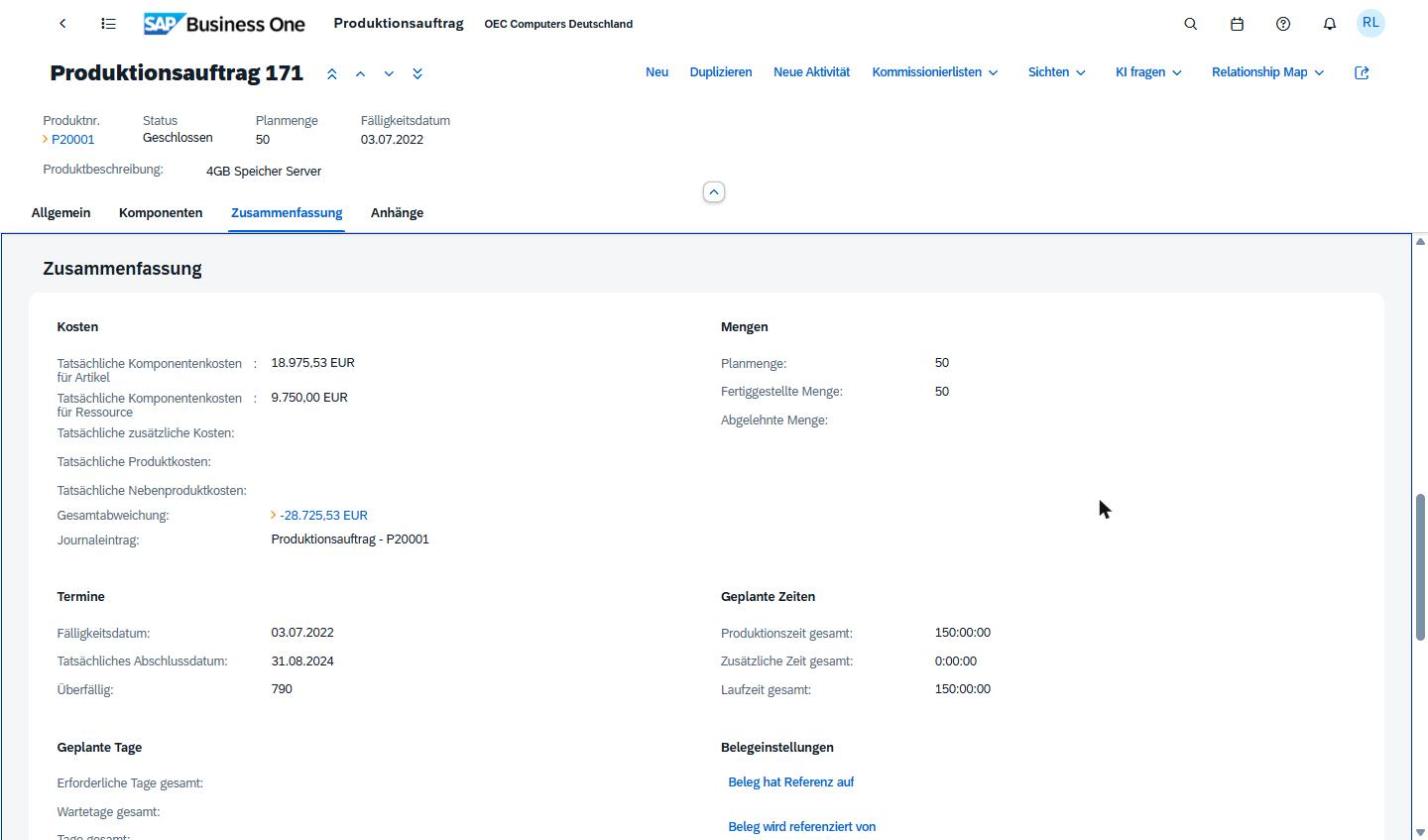
With production orders in SAP Business One, you can structure and document your production processes directly within the ERP system. Materials and quantities produced can be assigned to the respective order.
Central Order Management
Manage production orders—including the relevant quantities, products, and information—in one central location.
Provision of Materials
Assign the required components to the production order and manage their release from the warehouse.
Production Feedback
Record finished goods and transfer the quantities produced back into your inventory.
Order Summary
Keep a clear overview of current production orders and their status.

MATERIAL REQUIREMENTS PLANNING

Planning Material Requirements Proactively

With material requirements planning in SAP Business One, you can better coordinate production requirements, available inventory, and procurement. This allows you to identify early on which materials are needed and when additional demand will arise.
Needs Assessment
Determine the materials needed based on the available planning and company data.
Inventory Reconciliation
Take existing inventory levels into account when determining future material requirements.
Procurement Needs
Identify missing materials early on and use that information to determine the necessary procurement requirements.
Production Planning
Better align material availability with planned production and reduce bottlenecks.

RESOURCES & CAPACITIES

Integrating Resources into Manufacturing in a Targeted Manner

With SAP Business One, you can account for machinery, workstations, and other resources directly within your production processes. This provides greater transparency regarding required capacity and the costs associated with manufacturing.
Resource Management
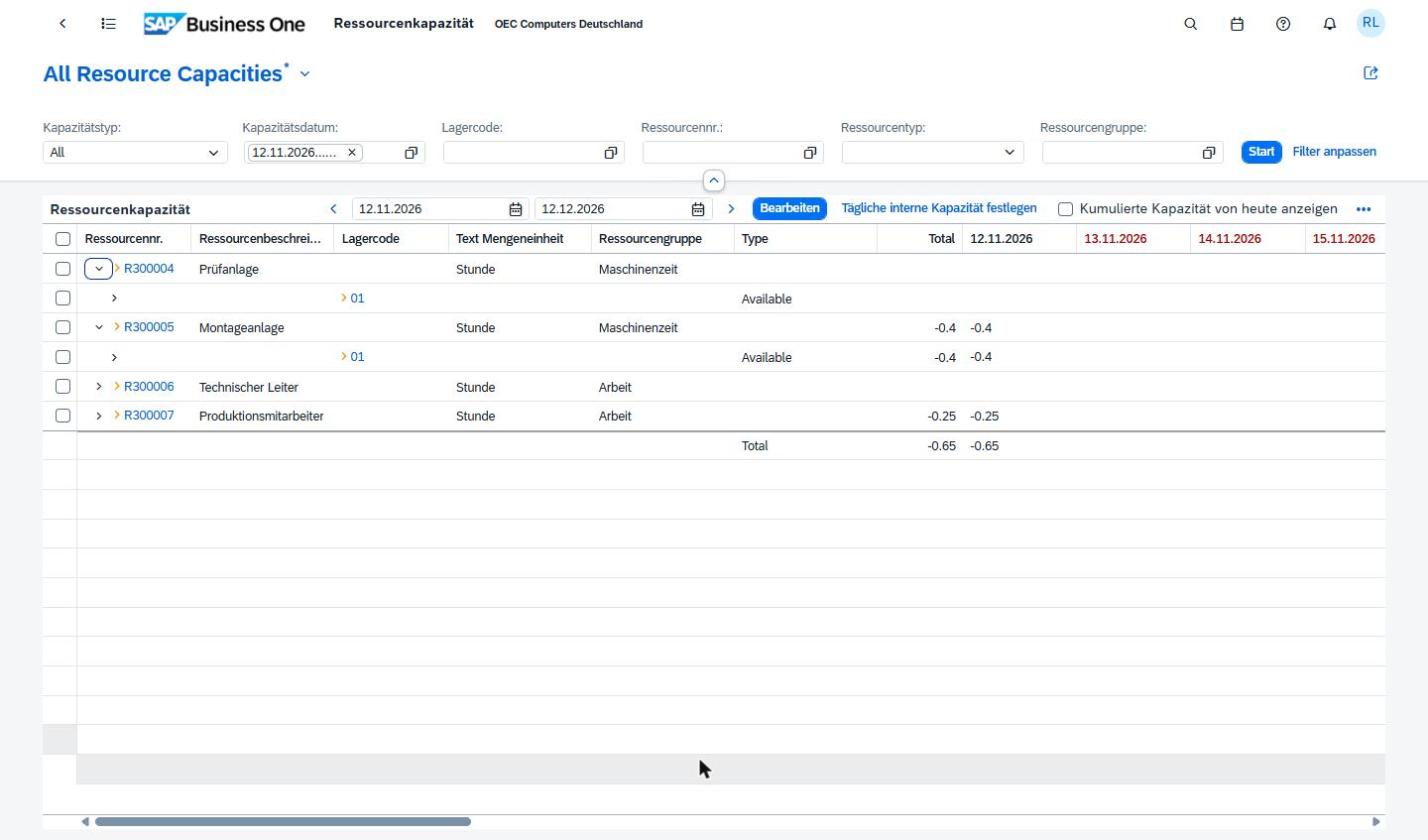
Map machines, workers, and other production-related resources centrally within the system.
Capacities
Enter available capacity and lay a better foundation for production planning.
Resource Costs
Take into account the costs of the resources used in your manufacturing processes.
Production Allocation
Assign resources to the appropriate production processes and ensure that their use is traceable.

PRODUCTION COSTS & COSTING

Transparently Track Manufacturing Costs

With SAP Business One, you can integrate material, resource, and production information. This creates a better data foundation for tracking costs throughout your manufacturing processes and making more informed business decisions.
Cost of Materials
Consider the materials used and their values as a significant component of your production costs.
Resource Costs
Include machinery, labor, and other resources in your analysis of production costs.
Production Costs
Compile relevant cost information based on material and resource usage in the production process.
Preliminary and Final Cost Estimates
Compare planned and actual production costs and gain insight into the profitability of your manufacturing operations.

EXPANDED PRODUCTION

Targeted Expansion of Complex Manufacturing Processes

For more demanding production environments, SAP Business One can be enhanced with specialized manufacturing functions. This allows for the end-to-end management of even the most complex requirements related to planning, cost estimation, quality, and outsourced manufacturing.
Detailed Planning & APS
Plan production orders in detail and optimally coordinate deadlines, resources, and capacities.
Quality Assurance
Integrate inspections and quality processes directly into your manufacturing workflows and document the results in a traceable manner.
Contract Manufacturing
Integrate external manufacturing steps into your production, procurement, and materials processes in a structured manner.

AI IN PRODUCTION & MANUFACTURING

Using AI to Manage Production More Intelligently

With AI and automation, you can make even more targeted use of your SAP data. Information becomes accessible more quickly, recurring processes can be automated, and different systems can be intelligently integrated with one another.
AN Group KI Header Video Produktion | ANG
ANG KI Siegel Logo mit Slogan transparent | ANG

// SAP Business One in Action

See how companies grow with SAP

Improve planning reliability, resource utilization, and on-time delivery. Discover how companies are using SAP Business One and intelligent technologies to streamline their production processes and support sustainable growth.
ANG | M.Tanner AG 05
M. Tanner AG: Greater Transparency and Planning Certainty in Plant Engineering
SAP Business One helps M. Tanner AG manage complex projects, production, and service within a centralized system landscape and maintain a clear overview at all times.
ANG | Buebchen Products
Bübchen Skincare GmbH: Greater Efficiency in Production and the Supply Chain
With SAP Business One and Beas Manufacturing, Bübchen Skincare GmbH is optimizing its production processes and laying the foundation for efficient operations and further growth.
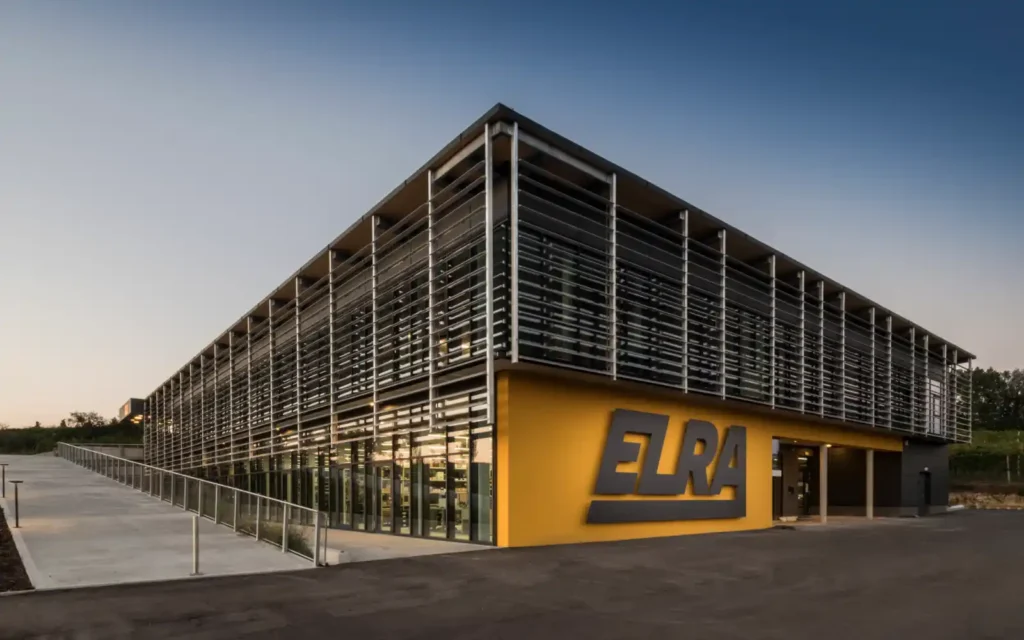
ELRA Antriebstechnik GmbH
ELRA Antriebstechnik GmbH: Future-Proof Manufacturing with SAP Business One
With SAP Business One, ELRA is creating transparency throughout the entire manufacturing process, utilizing real-time metrics, and establishing a future-proof platform for continued growth and increasing demands.
ANG | SAP Platinum Logo

SAP Business One with ANG

SAP Business One Expertise for Production That Drives You Forward

As an SAP Platinum Partner, ANG combines in-depth SAP Business One expertise with a comprehensive understanding of manufacturing processes. From implementation to optimization and further development, we take a holistic approach to manufacturing, materials management, and related business processes.

Consulting & Process Design

We analyze your workflows and customize SAP Business One to fit your processes and requirements.

Support & Further Development

We integrate SAP Business One with other systems and automate processes and workflows.

Implementation & Optimization

We implement SAP Business One in a structured manner and further develop existing solutions in a targeted way.

Integration & Automation

We provide long-term support for your solution and continue to develop SAP Business One in line with your requirements.

SAP Business One as an ERP Solution for Manufacturing Companies

SAP Business One helps medium-sized manufacturing companies integrate production, materials management, and related business processes into a single, centralized ERP system. Instead of treating production planning, purchasing, warehousing, sales, and finance as separate functions, relevant information is available in a shared database.From bills of materials and material requirements planning, through production orders and resources, to the finished product, key production processes can be mapped in a structured manner. Material requirements can be identified early on, existing inventory can be taken into account, and missing components can be included in the procurement process. At the same time, production orders provide transparency regarding which products are being manufactured, which materials are required, and which resources are being used.
Production in Practice: How Stooss Forge Uses SAP Business One and Beas Manufacturing to Ensure Transparent Manufacturing Processes.
End-to-End Production Control: How Ensinger Sintimid Uses SAP Business One and Beas Manufacturing in Production.

For manufacturing companies in particular, the advantage of an integrated ERP system lies in the interaction between different business units: A sales order from the sales department can impact production planning, which in turn generates material requirements; missing components are procured, and finished products are then made available through warehousing and logistics. The associated business transactions are then fed into the financial system. SAP Business One connects these processes within a single system, thereby reducing isolated data sets and the need for manual reconciliations.

For companies with more extensive production control requirements, SAP Business One can be supplemented with advanced production solutions. These may include, for example, detailed planning and Advanced Planning & Scheduling (APS), detailed capacity planning, pre- and post-costing, quality assurance, or outsourced manufacturing. This allows the ERP solution to be adapted to more complex production processes and growing requirements.

From Concept to Implementation

Get More Out of Production and Manufacturing with SAP Business One

Expand SAP Business One with specialized solutions for production planning, shop floor management, warehouse logistics, and intelligent automation.
This allows even more complex manufacturing processes to be mapped digitally from start to finish.
AI & Manufacturing
Making Smart Use of Production Data
Use AI to make production data available more quickly and to automate recurring processes in a targeted manner.
Beas Manufacturing
Expanded Production for Complex Processes
Plan and manage materials, capacity, and production orders in a transparent and integrated manner to ensure efficient and seamless production processes.
COBI.ppc
Manage Service Calls Digitally
Capture production and operational data on the go, right on-site, and make up-to-date information immediately available in SAP Business One.
Perfion PIM
Centralized Control of Product Data
Manage product specifications, variants, and other information centrally, and provide consistent product data in SAP Business One.
ANG | 001 Alexej on leave e1731680251740

Frequently Asked Questions About SAP Business One for Production & Manufacturing

SAP Business One helps small and medium-sized businesses plan and manage key manufacturing processes. These include , among other things , bills of materials, production orders, material requirements planning (MRP), resources, and material and inventory movements. Since production, purchasing, warehousing, sales, and finance operate on a shared database, manufacturing processes can be managed more seamlessly.
Yes. SAP Business One is an ERP system suitable for medium-sized manufacturing companies that want to integrate their production with purchasing, warehousing, sales, and finance. Key production data is consolidated in the ERP system, enabling transparent management of material requirements, inventory, production orders, and resources. For more complex manufacturing requirements, the system can be expanded with specialized production solutions.
With SAP Business One, companies can link production requirements, bills of materials, materials, resources, and production orders. The integrated production planning helps ensure that required materials and available inventory are taken into account early on. For detailed fine-tuning and capacity planning—or Advanced Planning and Scheduling (APS) —SAP Business One can be expanded with additional solutions.
Material Requirements Planning (MRP) helps determine future material requirements for production and procurement. It takes into account existing inventory and planned requirements. This enables companies to identify early on which materials are needed and in what quantities, allowing them to better coordinate procurement and production.
With production orders in SAP Business One, production processes are mapped in a structured manner within the ERP system. Required components can be assigned to a production order, materials can be drawn from inventory for production, and finished goods can then be returned to inventory. This ensures that material movements and production quantities remain traceable.
Yes. Bill of materials (BOMs) in SAP Business One allow you to map products, assemblies, materials, and required components in a structured way. BOMs serve as an important foundation for production orders and material requirements planning and ensure a consistent data foundation within production.
Yes. In SAP Business One, resources such as machines, workstations, or labor services can be factored into production processes. Capacity and resource costs provide additional transparency for planning and cost estimation. Advanced production solutions are available for more detailed capacity and detailed planning.
SAP Business One consolidates information on the materials and resources used in production processes. This provides companies with a centralized data foundation for analyzing their production and manufacturing costs. For more advanced requirements, such as detailed pre- and post-production costing, SAP Business One can be supplemented with specialized solutions for production.
Yes. SAP Business One can be specifically enhanced to meet the needs of more complex manufacturing scenarios. Depending on your needs, you can add features such as detailed scheduling and APS, detailed capacity planning, pre- and post-costing, quality assurance, or outsourced manufacturing. This allows the ERP solution to keep pace with the needs of a growing manufacturing company.

Get more out of your manufacturing process.

Would you like to plan production processes more effectively, keep track of materials and capacity, and manage your manufacturing end-to-end?

Together, we’ll analyze your existing processes and show you how SAP Business One supports your production—from planning and material procurement to completion reporting and post-production costing.